• Thank you to Carol and Steve Bowman, the forum owners, for our new upgrade!

Tomo - Japanese / scottish case of 2000

Thanks, landsend, I looked at the list of names. If nothing else it proves that the General Register Office is thorough. The much easier way to search for candidates is to set the search function in scotlandspeople.gov.uk to "Name begins with" and then put in a letter of the alphabet (I just go through the whole alphabet A-Z). It gives all the names that begin with a given letter. I go through forename first (includes middle name if available), then surname this way, A-Z, letter by letter.

Candidate 9 "Michael" failed, by the way, even though he died in Ninewells Hospital Dundee in October 1997 (Oct 6, 1997). Nothing else matched. There was a discrepancy between the birth year I found on scotlandspeople.gov.uk (1988) for this candidate and his actual birth date as recorded on the death registration (specific month and day in 1987, not 1988!), which means that I will have to broaden the search criteria first for year born, then year died, to come up with more candidates that I may have overlooked. But at 20 US dollars a request I have to select candidates that I think will at least have a chance of matching more of our criteria. If you're playing this game at home, Ninewells Hospital is indeed in the Dundee District ("District" is a search option).
 
I thought the following was an exciting development. Recently I've been focusing on Tomo's statement to his Japanese mother about his previous personality, "British Tomo", taking yellow, round pills imprinted ("called") "EMD":

". . . . At around the same time the subject [Tomo], who had never taken a pill, said to the mother, " 'British Tomo' was taking a pill, called EMD." When asked by the mother, "What pill?"
he replied, "Yellow and round . . ."

I couldn't find any yellow, round tablets imprinted with the letters "EMD" either on the www.drugs.com website or photographed in an old 1997 edition of Physicians Desk Reference (PDR) that I happened to find on amazon.

However, I did find a SmithKline Beecham Pharma chewable Augmentin tablet that is/ was yellow, round, and imprinted with "BMP 190" both online (https://www.drugs.com/imprints.php?imprint=BMP190&color=13&shape=24 ) and in the old 1997 PDR (page 336, color photograph). (The 190 refers to the amount of active ingredient, amoxicillin, in mg, in the 250 mg dosage form; "BMP" mostly likely stands for Beecham Pharma, a British pharmaceutical company).

Augmentin is an antibiotic usually given to children to help kill off a bacterial infection. The chewable tablet version is given to children who have trouble swallowing the tablet whole.

Tomo stated that his previous personality suffered from severe childhood asthma, and in fact, died at age 9 in hospital, after an especially severe attack led to an operation which resulted in a bacterial infection and 106 F (40 C) fever which resulted in his death. If you google search asthma, asthmatics you will discover that these children often suffer bacterial infections/ high fever due to asthmatic congestion and narrowing of their bronchial passageways. So it makes sense that he was put on an antibiotic especially in hospital after the initial asthmatic attack. Since he would have had trouble swallowing any tablet due to his asthma, he most likely would have been given a chewable version of the Augmentin drug product.

So, could Tomo's visual memory of the unfamiliar latin letters "EMD" have been a misreading of the actual imprinted "BMP" yellow, round tablet? If you look at the color photograph either online or in the Physicians Desk Reference, the "B" does resemble an "E" even to my eyes. And to a non-latin-letter reading Japanese 5 year old "BMP" might easily be confused with "EMD", I should think. But, I'm sure skeptics will have a different opinion.

I searched the rest of drugs.com for color photographs of all other yellow, round tablets starting with either E or B, and could only come up with one other imprinted tablet that was remotely close, a yellow, round Roche Pharma Ender tablet imprinted with "ENDER 75 ROCHE" on one side. Ender is an anti-depressant medication which is also given to patients suffering from nerve pain. I don't think these symptoms fit British Tomo so we can probably dismiss this candidate tablet.

By the way, I know EMD stands for Emanuel Merck Darmstadt, and is the label German Merck (headquarters Darmstadt, Germany) is known by here in North America (US and Canada), and is not to be confused with the American pharmaceutical company called Merck and Company, which is known by the label MSD (Merck Sharp & Dohme) outside the US and Canada. I couldn't find any reference photographs of German Merck tablets, so I don't know what they imprinted their tablets with back in the 1990s. German Merck's EMD Serono group came about due to a German Merck acquisition of the Swiss pharma company Serono back in 2007.
 
Last edited:
As a British person the first thing I noted in the report was that distances were recorded in kilometres rather than the customary miles. I presume the Japanese measure in km. Could a confusion between the two add to the existing problems of comprehension in this case? In Tomo's drawing he writes 317 ml the second letter being ambiguous. I wonder is this meant to indicate miles or the metric millilitres or milligrams, which are commonly used for food and pharma products, or something else? This case is most unusual for the number of numerical references. Just to add to the list of oddities, it is not clear that Tomo's past life originated in the U.K. Plenty of restaurants are run by immigrant families.
 
Exactly right, Observer. The UK including Scotland uses miles, not kilometers to measure distances and has always used miles and not kilometers since time immemorial. Why would Tomo have purportedly stated that he was taken to a hospital 115 km from his house? I noticed the discrepancy with the kilometres/ miles statement several days ago but have been holding off posting about it until I got some clarification from Professor Ohkado. You also bring up a great point about the possibility that the family of Tomo's previous personality may have been immigrants to either the UK, if we believe Tomo's map reading ability, or somewhere else (which would justify the km useage). I haven't looked at the original JSE paper recently so don't remember the bit about "317 ml" . I'll go back and re-read it just for that. For everyone's information Professor Ohkado wrote and published a paper in Japanese on the Tomo case something like a year or two before the paper appeared in English in UVa DOPS's Journal of Scientific Exploration. Once again, great observation, Observer.

PS. How Tomo's father and/or mother interpreted Tomo's rendition of "Southall" has also been bugging me. I wish we could find out exactly how Tomo pronounced what should have been a fairly difficult word for a native Japanese speaker.

PSPS. I looked at Tomo's drawing in the 2013 JSE paper. The "3 17 m" is readable but I can't make out the character after "m". Looks like a "c" drawn backwards. If it is "l" then it is a very poorly drawn "l". The mother's notes indicate that Tomo drew this picture (Figure 1) at the age of 2 years and 10 months.

PSPSPS. To look at the figures without having to login to or register at academia.edu you can go to this on-line reprint in Portugese (published 18 Nov 2018):

https://document.onl/documents/rela...a-espirita-sobre-o-nascimento-da-crianca.html
 
Last edited:
If this reads mc rather than ml, I wonder what it could mean? So many options, it could have been his height in cms even, if Tomo had reversed the word. The references to having hairy legs and a penis discharge sound like an older child. I wonder if the dates and numbers are heavily inaccurate? This case refers to numbers more than any I am aware of. I wonder did the mother hear him simply state the numbers plainly or give a show of fingers, as small kids do?
 
What do you make of Figure 2? It was drawn and signed by Tomo when he was 2 years 10 months old. It shows the face of a person with the faces of two more persons one on either side looking at the central face. Beneath the threesome is a pretty well-drawn alarm clock (for an almost 3 year old), with one arm of the clock pointing to the 10 and the other arm pointing to the 2. Beneath the alarm clock is Tomo's signature "Tomo" in Latin letters, and the digital time "10:10" as if he is reiterating the analogue time on the face of the alarm clock. The eyes of the central face are wide open and blackened, in contrast to the eyes of the two onlookers, which are drawn as dots. Could the central face be Tomo's death portrait? Could British Tomo have died at 10:10 (am or pm) with each of his parents looking on? Tomo has drawn the central face with a blackened chest, and blackened eyes.

PS. To look at the figures without having to login to or register at academia.edu you can go to this on-line reprint in Portugese (published 18 Nov 2018):
https://document.onl/documents/rela...a-espirita-sobre-o-nascimento-da-crianca.html
 
Last edited:
Your summary matches what we see in the picture. What did Tomo say of it? I found nothing additional. The faces could be parents or siblings or others. The most intriguing part is that he seems to demonstrate knowledge of both a digital and analogue clock.
 
For the present, I’m still assuming we’re researching a legitimate CORT even though red flags are starting to pop up (eg., kilometers/ miles discrepancy; interpretation of “Southall” in Japanese by Tomo’s father as Southall, England, etc.). Here are the results to date of my requests to NRS via Scotlandspeople.gov.uk :

Name, Age, Year of Death, Registered in District of, Match/No Match

1. Gary, 10, 1997, Dumbarton, no match
2. Jack, 10, 1997, Linlithgow, no match
3. Ross, 8, 1997, Edinburgh, no match
4. Craig, 10, 1997, Edinburgh, no match
5. Scott, 9, 1997, Aberdeen, no match (but born August 4 vs. British Tomo's PP
date of birth Aug 9)
6. Garry, 9, 1997, Dundee, no match
8. Kristofer, 9, 1997, Rosskeen, no match
9. Michael, 9, 1997, Dundee, no match
10. Gary, 8, 1998, Dundee, no match (but mother's occupation "kitchen assistant").
11. Douglas, 9, 1997, Falkirk, no match
12. Derek, 12, 1997, Dundee, no match (but cause of death was acute bronchial asthma in
Ninewells Hospital, Dundee, and born August 12 vs. British Tomo’s PP date of birth
August 9; middle name Greig vs. Tomo's PP name "ge-ir-isu").
13. Micheal, 10, 1999, (Gilbert), Aberdeen, no match
14. Paul, 11, 1998, (Fenwick), Aberdeen, no match
15. John, 9, 1998, Renfrew, no match
16. Charles, 9, 1998, Bellshill, no match
17. James, 9, 1998, St. Andrews (Fife), no match
18. Dean, 9, 1998, Peterhead, no match
19. Darren, 9, 1998, Stornoway, no match
20. Ford, 9, 1998, Glasgow, Martha St., no match
21. Stephen, 10, 1997, Glasgow, Martha St., no match
22. Daniel, 11, 1997, Glasgow, Martha St., no match
23. George, 8, 1998, Glasgow, Martha St., no match
24. Daryl, 8, 1997, Glasgow, Martha St., no match
25. William, 8, 1998, Glasgow, Martha St., no match
26. Scott, 8, 1997, Glasgow, Martha St., no match
27. Stephen, 11, 1997, Glasgow, Martha St., no match
28. Stuart, 10, 1998, Glasgow, Martha St., no match, (but cause of death cystic fibrosis, and
date of birth Aug 21, 1988 vs. Tomo's PP date of birth Aug 9, 1988. Father not named,
no occupation listed for mother. Died in Children's Hospital Yorkhill Glasgow. Tomo's
PP name“ge-i-ri-i-su” similar to surname (or maiden name) for mother and son if devoice
initial consonant, and re-anglosize/ lateralize "-ri-i-su" ending. Death date on 26th, just a
few days short of New Year's Eve (Hogmanay) celebrations vs. Tomo's PP death date on
24/25th just a few days short of Bonfire Night/ Guy Fawkes Night celebration.)
29. Allan, 10, 1997, North Berwick, no match, (but died Oct 23, 1997 vs. Tomo’s PP death date
Oct 24/25, 1997; died at home about 17 miles east of Edinburgh of metastatic lung
carcinoma/ cancer; last name reminiscent of Tomo's PP name 'geirisu' especially if replace
initial velar with the voiceless glottal fricative consonant and nazalize last syllable)
30. John, 10, 1998, Vale of Leven, no match
31. Adeel, 10, 1997, Cumbernauld, no match
32. Callum, 10, 1998, Strathendrick, no match, (but died of respiratory failure/ lower
respiratory tract infection)
33. Darren, 10, 1998, Bathgate, no match
34. Gregg, 10, 1998, Nairn, no match
35. Stuart, 10, 1997, Glenrothes, no match, (but died Nov 3, 1997 vs. Tomo’s PP death date
Oct 24/25, 1997)
36. Barry, 10, 1999, Hamilton, no match
37. Derek, 10, 1999, Elgin, no match
38. Hazem, 10, 1999, no match
39. Scott, 10, 1998, no match, (but born Aug 29, 1988 vs. Tomo’s PP birthdate Aug 9, 1988)
40. Fraser, 9, 1999, no match, (but died in Victoria Hospital, Kirkcaldy, a hospital with a
10-13 story block or tower or wing, died of pneumonia)
41. Jamie, 9, 1999, no match (but mother's occupation "public house ('pub') manager").
42. Joseph, 9, 1998, no match
43. Vijay, 9, 1998, no match, (but born Aug 6, 1988 vs. Tomo’s PP birthdate Aug 9, 1988)
44. Sam, 8, 1999, no match
45. Alistair, 8, 1997, no match
46. Benjamin, 8, 1998, no match
47. Lee, 8, 1997, no match
48. David, 8, 1999, no match
49. David, 8, 1998, no match
50. Jason, 8, 1998, no match
51. Phillip, 8, 1997, no match
52. Uisdean, 8, 1999, no match
53. Wahid, 11, 1998, no match
54. Lewis, 11, 1998, no match
55. Jamie, 11, 1998, no match
56. Grant, 11, 1999, no match
57. Robert, 11, 1998, no match, (but died Oct 11, 1998 in Ninewells Hospital, Dundee, of choking (“Hanging”). Tomo claimed his PP died Oct 24/25, 1997. Also, this is the first case connecting one of the parents to the food service, food preparation or restaurant industry – as the mother’s occupation is listed as “Cook”).
58. Christopher, 11, 1998, no match
59. Stephen, 11, 1999, no match, (but born Aug 4, 1988)
60. Kevin, 11, 1998, no match
61. Archibald, 11, 1998, no match, (but died 2210 hours, ie., “10:10”, in 8-storey Raigmore Hospital, Inverness, 155 miles north of Edinburgh )
62. Blair, 11, 1998, no match
63. Alan, 11, 1998, no match
64. Daryl, 11, 1999, no match
65. Charles, 12, 1997, no match
66. Talal, 12, 1997, no match
67. Andrew, 12, 1997, no match, (but died Nov 7, 1997 of a disease whose symptoms include
difficulty swallowing and eating and recurrent pneumonia)
68. Paul, 12, 1998, no match
69. Barry, 12, 1998, no match
70. Alan, 12, 1998, no match
71. Simon, 12, 1999, no match
72. Charles, 12, 1999, no match
73. Peter, 12, 1999, no match
74. Craig, 12, 1999, no match
75. Craig, 12, 1998, no match
76. Craig, 12, 1999, no match
77. James, 12, 1998, Dumbarton, no match, (but born in August, died of asphyxia, and father worked as a sectional head chef "Chef de Partie")
78. Thomas, 12, 1999, no match (but died of a chest infection)
79. Gary, 12, 1998, no match (but born August 9, 1986 vs. Tomo’s PP birth date August 9, 1988)
80. Derek, 12, 1999, no match
81. David, 12, 1997, no match (but died of a respiratory disorder and some type of pneumonia)
82. Gary, 12, 1997, no match
83. Graeme, 12, 1998, no match
84. Rory, 12, 1999, no match
85. Philip, 12, 1997, no match
86. Tyler, 12, 1999, no match

By “match” I mean that the data for any particular candidate should match several of the key statements Tomo made about his previous personality, such as dying in “Room 4” of a “13-story” or “7-story” hospital north (northwest, northeast) of Edinburgh, Scotland due to high fever or complications of an asthmatic attack or other respiratory illness, or post-operative infection relating to such a condition; dying sometime between late October and early November in 1997, having one or both parents associated with a restaurant, being about 9 years old or so at time of death and having a usual address (we say “home address”) in or near Edinburgh or within commuting distance of Edinburgh. These are examples of “hits” that I’m looking for. “No match” would mean enough of these key statements weren’t matched to my satisfaction. If any of Tomo’s statements were satisfied or nearly satisfied, but not enough of the key ones to rate an overall “match” I make a note of them.

According to Scottish law a death must be registered within 8 days at any of a couple of hundred districts or other registration centers located throughout Scotland, not necessarily where the death took place or even in the home district of the deceased. Cause of death is required in order to register a death, as attested to by a signed affidavit by a certified person/ professional . Of the 59 death certificates that I have received so far, 57 were signed by one of the parents or other close relative, and one was signed by a detective. Penalty for late registration is 200 pounds (about $ 260 US dollars.). I don’t know what the penalty is for non-registration, but I do know that you can’t bury a person without a registration certificate, and, according to Tomo, his previous personality was buried.

If this is a legitimate CORT then I think it is solvable, given the excellent on-line resources NRS (National Records of Scotland) has put at our disposal. Tomo’s previous personality must have died in a narrow window sometime between the Southall, England train accident (Sept 19, 1997) and Tomo’s birth in Japan in January 2000. If you’re following along at home this means setting the Year of Death range from 1997 to 1999. Since his previous personality was undergoing onset male puberty at the time, we can set his gender as male, and his age range from 8 to 12 (google says male puberty begins sometime at 9-14 y.o., but I lower it by one year to catch any 9 y.o. that are listed as 8 in the search results.). For age range I put 8-10 y.o., to limit the number of names to several dozen, but will add 11-12-year-olds later on if I can’t come up with any promising candidates around 9 years of age. For the Year of Birth field, I’ve been putting 1988 +/- 3 years. For the County/City/Minor field and the District field I’ve been leaving them both at the default “All”. If you are trying to do this at home, I think this forum would appreciate any results, certainly any negative results, that you may come up with. If you should come up with a “match” or likely candidate, I’ll leave it up to you to decide what to do with that result.

Oh, and by the way, Good luck.


PS: I found this on the web:

“Some people with high functioning autism or Asperger's Syndrome demonstrate extreme abilities in remembering facts, numbers, phone numbers, maps, words, birth dates, or other factual information, (Mayes, 2008, p. 2).” (quote taken from disabled-world.com/health/neurology) Mayes, S.D. (2008). Checklist for autism in young children. Retrieved February 5, 2008
 
Last edited:
I just came home from vacation and I'm very pleased about the new information on this topic! It will take some time for me to read and rethink it.

All the best
SF
 
Tomo claimed that the name of the hospital or place where he died was "Muginba Paresu".

According to google translate:

"mugen" means 'dream, fantasy; infinite' in Japanese.
"ba" means 'place; sphere, realm' in Japanese.
"paresu" means 'palace' in Japanese.
 
Last edited:
I’m a student of the Japanese language and I made an account so I could comment.

As the others already said, if the mother didn’t have a good grasp on English then what she wrote down is only an approximate, and it doesn’t help that this little kid would have said what he said in a Japanese accent.

Assuming he said Muginba Paresu as the hospital he was staying in, and assuming that would have been in Scotland, then we can take a guess that he was trying to say something in English.

What I wanted to say was, if it was “muginba” written down in kana (their non character alphabet) then it would actually be pronounced “mu-gim-ba” because n changes to an m sound when before a b in Japanese. Of course him being a child the m or ba sound could have been like a toddler mumble so maybe it was just “mu-gim” or “mu-gi-b”. It’s hard to tell.

And Paresu would be pa-re-su. Like what someone said before three could mean parish but, I’d like to point out the Japanese r sounds a bit like a d, l and r mixed together AND the “u” sound on the end of su is often not said in Japanese. (Despite what anime might have you believe). So it could have sounded more like pa-das or pa-ras if it was more of an English R.

Also wanted to point out that Japanese has an alphabet as well as characters, so whilst what the person above says could be an interpretation of what Tomo said in Japanese “kanji” (their Chinese characters), the mother most likely wrote it down in their alphabet for foreign words (katakana) and May have looked something like this.
ムギンバ パレス, if she’d have written the words the person above suggested it would have been in kanji and the article would have mentioned it.

Hope this helps :)

- I guess at the end of the day it’s really hard when it’s cross language like this, especially with Japanese where it’s spoken in separate syllables unlike English where our sounds flow together. For example, take the word scarf. Japanese people use the word scarf too to mean fashion scarf but it’s pronounce su-kaa-fu. If you say it out loud it sounds like scarf but it’s so different from the original English word you might not be able to guess that without me telling you.
So the problem with this is, even though we have what his mother heard, it might be impossible to try and turn it back into English without hearing it from him out loud. And even then he might have been trying to say a word that he knew in a Scottish accent which would further complicate the issue.
 
Last edited:
Thank you Sheeply for your input and understanding, it was kind of you to taken the time to address this issue.
 
Sheeply, thank you for joining the discussion. You’re observations are well taken. I’ll defer any comments I might have for a later date. I would only point out that we don’t have to assume anything. We need only go down the list of names methodically, one by one, obtain the death certificates from Scotland’s National Records, and decide if any of the deceased boys match the very specific claims purportedly made by Tomo to his mother as documented by several researchers over the years since 2005. There will either be a “match” – a likely candidate, or there won’t be.

In the meantime, if anyone is interested in the academic side of things, they should try to get ahold of the following articles that discuss Tomo’s case:

Ikegawa, A. (2005). Investigation by questionnaire regarding fetal/infant memory in the womb and/or at birth. Journal of Prenatal and Perinatal Psychology and Health,20 (2), 121–133 (available on-line. This was the original article on Tomo).

Miyao, M. (2007). Jiheishou no hajimari to ninchishougaikasetsu. Gendai Shiso, May issue, 196–211. (Dr. Miyao was the psychologist who examined Tomo in 2005.)
(available at Stanford University: https://searchworks.stanford.edu/view/4178280
Call no. (off campus storage): B804 .G42 V.35:NO.4-6 2007 ; I haven’t been able to find this article anywhere else, so if anyone could help obtaining a re-print it would be greatly appreciated. )

Ohkado, M. (2011). Kakosei no kioku o motsu kodomo ni tsuite: Nihonjin jidou no jirei. Jintaikagaku 20, 33–42. (This was Professor Ohkado’s original paper in Japanese).

And of course, Professor Ohkado’s 2013 paper on Tomo in UVa’s JSE is available for viewing on-line at academia.edu; you just need to sign in. If you’re at all interested in reading academic papers related to this paper (or any other paper in your field of interest)(they send you recommendations automatically to the e-mail address that you provide), I would encourage you to sign up. It’s free and pretty painless.

Once again, thank you brave Sheeply for chiming in. Please keep checking in as I will be providing updates as the weeks and months progress. I’ll assume you are an undergraduate (or whatever the UK or British Commonwealth equivalent is) in Japanese language studies. Good luck this term!
 
Last edited:
Thank you! :) this stuff is super interesting to me so if I can help in any way I can. I hope we can find a match for him. Even if we can’t, it’s certainly very interesting.

We are called undergraduates here in the UK too :) thanks for the well wishes, good luck on your search too!
 
Sheeply, thanks for your offer. If you have a little free time and can read romanized Japanese writing, you can try to translate the journal article titles into English in the post above. But only if you have some free time. Your studies come first.
 
Okay so I’ve got a good idea of what the titles say.
Miyao, M. (2007). Jiheishou no hajimari to ninchishougaikasetsu. Gendai Shiso.

This probably says “autism’s origin and cognitive disorder hypothesis. Contemporary philosophy”
I say probably because I can’t see the kanji and some of the word sounds have (not joking) 20+ meanings so I had to make a guess.
Edit: after some further thought I think it might say “the beginning of autism and cognitive disorder hypothesis”

Ohkado, M. (2011). Kakosei no kioku o motsu kodomo ni tsuite: Nihonjin jidou no Jirei. Jintai kagaku

This one says something along the lines of “Child who gained the ability to retain the memory of a previous life: Japanese children’s case. Human body science/sciences”

Hope this helps! Good practise for me too haha :)
 
Last edited:
Thanks, Sheeply. Well done.


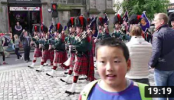
(Japanese boy and his mother at 5:55. And there he is again at 8:16. Check out the produce van at 10:10-10:13. Edinburgh seems to be a mecca for tourists. Note especially the Japanese tourists scattered along the parade route.)
 

Attachments

  • upload_2019-9-7_17-13-3.png
    upload_2019-9-7_17-13-3.png
    157.5 KB · Views: 12
Last edited:
That would indeed be a "feel-good" thing to do. I've wondered if someone has ever recognized me as being someone in a prior physical experience and are refraining from telling me, it could get mixed up quite a bit as I could have difficulty in determining which lifetime the meeting occurred.
 
Tomo claimed that he died late October 1997 in “Room” 4 on the 7th floor of either a 13-story wing or 7-story wing of a hospital 115 “kilometers” north of his home in or near Edinburgh, Scotland. I google-searched “list of hospitals in Scotland” and found that Wikipedia has a list of over two hundred hospitals in Scotland listed by district. I was especially interested in photographs or floor plans (or both) of hospitals that were open in 1997 and that looked like they may have wings or towers either around 7 or around 13 stories high. If Wikipedia (or NHS Scotland) lacked photographs or floor plans of individual hospitals then I searched google images for them. I was able to come up with a list of candidate hospitals that fit Tomo’s description of the particular hospital he was treated at (having a 7- and/or 13-story tower or wing) and, for several of the hospitals, the location of wards and ward numbers within a particular hospital. Here is the list I came up with divided into 2 parts – hospitals north of Edinburgh; and hospitals west of Edinburgh. (There weren’t any candidate hospitals south or east of Edinburgh and still within Scotland).

Candidate Hospitals North of Edinburgh:

1.Aberdeen Royal Infirmary, Aberdeen, Scotland
(7 floors, 128 miles north of Edinburgh)

2. Victoria Hospital, Kirkcaldy, Scotland
(10-13 floors, 28 miles north of Edinburgh)

3. Ninewells Hospital, Dundee, Scotland
(7 floors with 13-floor lift/ elevator tower, 60 miles north of Edinburgh)

4. Raigmore Hospital, Inverness, Scotland
(8 floors, 155 miles north of Edinburgh)

Candidate Hospitals West of Edinburgh:

1.Inverclyde Royal Hospital, Greenock, Scotland
(7+ floors, estimated, 78 miles west of Edinburgh)

2. Gartnavel General Hospital, Glasgow City, Scotland
(10 floors, more or less, estimated, 49 miles west of Edinburgh)

3. Glasgow Royal Infirmary, Glasgow City, Scotland
(8 floors, more or less, estimated, 46 miles west of Edinburgh)

4. Royal Hospital for Sick Children, Yorkhill, Glasgow, Scotland
(in 2015 this hospital was renamed and repurposed as the
West Glasgow Ambulatory Care Hospital)
(6-8 floors, estimated, 52 miles west of Edinburgh)
 
Last edited:
Tomo claimed he was born August 9, 1988 and died October 24/25, 1997, age 9. Here are complete lists of all 8, 9, 10, 11, 12, and 13-year-olds who died and were registered in Scotland, 1997-1999. I drew up the lists based on data from the National Records of Scotland’s website:

www.scotlandspeople.gov.uk

Complete List of Candidate 8- and 9-year-olds:

Name, Age, Year of Death, Registered in District of, Match/ No Match (=X)

X-1. Sam, 8, 1999, Wick
X-2. Alistair, 8, 1997, Port Glasgow
X-3. John, 9, 1998, Renfrew
X-4. Garry, 9, 1997, Dundee
X-5. Charles, 9, 1998, Bellshill
X-6. Gary, 8, 1998, Dundee
X-7. Benjamin, 8, 1998, Lathron,
X-8. James, 9, 1998, St. Andrews (Fife)
X-9. George, 8, 1998, Glasgow, Martha St.
X-10. Douglas, 9, 1997, Falkirk
X-11. Lee, 8, 1997, Penicuik and Glencorse
X-12. Daryl, 8, 1997, Glasgow, Martha St.
X-13. Dean, 9, 1998, Peterhead
X-14. Darren, 9, 1998, Stornoway
X-15. David, 8, 1999, Carnoustie
X-16. David, 8, 1998, Glenrothes
X-17. Ford, 9, 1998, Glasgow, Martha St.
X-18. Fraser, 9, 1999, Glenrothes
X-19. Scott, 9, 1997, Aberdeen
X-20. Jamie, 9, 1999, Larbert
X-21. Jason, 8, 1998, Bathgate,
X-22. Joseph, 9, 1998, Kirkintilloch
X-23. Ross, 8, 1997, Edinburgh
X-24. Kristofer, 9, 1997, Rosskeen
X-25. William, 8, 1998, Glasgow, Martha St.
X-26. Michael, 9, 1997, Dundee
X-27. Phillip, 8, 1997, Duns,
X-28. Scot, 8, 1997, Glasgow, Martha St.
X-29. Uisdean, 8, 1999, Tain,
X-30. Vijay, 9, 1998, Eastwood and Mearns

Complete List of Candidate 10-year-olds:

Name, Age, Year of Death, Registered in District of, Match/ No Match (=X)

X-1. Jack, 10, 1997, Linlithgow
X-2. Allan, 10, 1997, North Berwick
X-3. John, 10, 1998, Vale of Leven
X-4. Adeel, 10, 1997, Cumbernauld
X-5. Barry, 10, 1999, Hamilton, no match
X-6. Callum, 10, 1998, Strathendrick (Balfron)
X-7. Craig, 10, 1997, Edinburgh
X-8. Darren, 10, 1998, Bathgate
X-9. Derek, 10, 1999, Elgin
X-10. Stuart, 10, 1998, Glasgow, Martha St.
X-11. Gary, 10, 1997, Dumbarton
X-12. Greg, 10, 1998, Nairn
X-13. Stephen, 10, 1997, Glasgow, Martha St.,
X-14. Hazem, 10, 1999, Old Kilpatrick,
X-15. Micheal, 10, 1999, Aberdeen,
X-16. Stuart, 10, 1997, Glenrothes
X-17. Scott, 10, 1998, Larbert


Complete List of Candidate 11-year-olds:

Name, Age, Year of Death, Registered in District of, Match/ No Match (=X)

X-1. Daryl, 11, 1999, Larkhall
X-2. Alan, 11, 1998, Carluke
X-3. Archibald, 11, 1998, Inverness
X-4. Blair, 11, 1998, Penicuik and Glencorse
X-5. Paul, 11, 1998, Aberdeen
X-6. Christopher, 11, 1998, Kilbirnie, Beith, and Dalry
X-7. Stephen, 11, 1997, Glasgow, Martha St.
X-8. Daniel, 11, 1997, Glasgow, Martha St.
X-9. Stephen, 11, 1999, Airdrie
X-10. Kevin, 11, 1998, Bailieston
X-11. Grant, 11, 1999, Forfar
X-12. Jamie, 11, 1998, Cumbernauld
X-13. Lewis, 11, 1999, Kennoway
X-14. Wahid, 11, 1998, Glasgow, Martha St.
X-15. Robert, 11, 1998, Dundee

Complete List of Candidate 12-year-olds:

Name, Age, Year of Death, Registered in District of, Match/ No Match (=X)

X-1. Andrew, 12, 1997, Cumbernauld
X-2. Simon, 12, 1999, Inverurie
X-3. Alan, 12, 1998, New Kilpatrick
X-4. Charles, 12, 1999, Ballachullish
X-5. Talal, 12, 1997, Old Kilpatrick
X-6. Barry, 12, 1998, Glasgow, Martha St.
X-7. Paul, 12, 1998, Dundee
X-8. Charles, 12, 1997, Denny
X-9. Peter, 12, 1999, Edinburgh
X-10. Craig, 12, 1998, Penicuik and Glencorse
X-11. Craig, 12, 1999, Stromness
X-12. James, 12, 1998, Dumbarton
X-13. Craig, 12, 1999, Penicuik and Glencorse
X-14. Thomas, 12, 1999, Edinburgh
X-15. Gary, 12, 1998, Glasgow, Martha St.
X-16. Derek, 12, 1999, Denny
X-17. David, 12, 1997, Bellshill
X-18. Derek, 12, 1997, Dundee
X-19. Gary, 12, 1997, Livingston
X-20. Graeme, 12, 1998, Greenock
X-21. Rory, 12, 1999, Lochgilphead
X-22. Philip, 12, 1997, Cambuslang
X-23. Tyler, 12, 1999, NRH (New Register House, Edinburgh, Scotland)


Complete List of Candidate 13-year-olds:

Name, Age, Year of Death, Registered in District of, Match/ No Match (=X)

X-1. Arron, 13, 1997, Leith
X-2. Alan, 13, 1998, Glasgow, Martha St.
X-3. Christopher, 13, 1999, Larbert
X-4. Andrew, 13, 1999, Buckie
X-5. Alexander, 13, 1998, East Kilbride
X-6. Jason, 13, 1998, Oban
X-7. Andrew, 13, 1997, Bellshill
X-8. Scott, 13, 1999, Huntly
X-9. John, 13, 1998, Dunfermline
X-10. Thomas, 13, 1997, Stirling
X-11. Craig, 13, 1997, Lockerbie
X-12. Craig, 13, 1998, Glasgow, Martha St.
X-13. Murray, 13, 1997, Prestonpans
X-14. David, 13, 1999, Eastwood and Mearns
X-15. Stephen, 13, 1997, Forres
X-16. David, 13, 1999, Dumfries
X-17. Mark, 13, 1999, Paisley
X-18. Gary, 13, 1999, Hamilton
X-19. Mark, 13, 1998, Ellon
X-20. John, 13, 1997, Port Glasgow
X-21. John, 13, 1999, Strathy
X-22. John, 13, 1999, Stirling
X-23. Steven, 13, 1998, Holm and Paplay
X-24. Mohammed, 13, 1998, Glasgow, Martha St.
X-25. Niall, 13, 1998, Cupar
X-26. Paul, 13, 1997, Saltcoats
X-27. Sean, 13, 1999, Dunfermine
 
Last edited:
“GuySittingintheStands” said:
Several of Tomo’s statements involving milk baths, medicated hot water massages, and herbal drinks support his claim of having been an asthmatic child in a previous life. Milk and medicated warm water baths are used to help reduce the itching and inflammation of eczema, a severe allergic skin disorder. Eczema, it turns out, has been shown to be a precursor to asthma in children.

Herbal infusions, like wheatgrass juice, are given to asthmatic children for their anti-inflammatory properties. Pineapple juice contains bromelain, an anti-inflammatory. Each of these are examples of non-steroidal interventions for asthmatic children for whom, the usual steroidal course of treatment has either stopped working or aggravated the child’s overreactive immune response.

The following are the relevant statements from Professor Ohkado’s JSE 2013 paper:

Tomo, 4 y.o. : “In the UK, I bathed in milk (bath).” Pointing to the washbasin, the subject repeatedly said “Washbasin” in English.

Tomo, 4.2 and 5.6 y.o.: “In the hospital, there was a place like a bath, and there was a doctor who put powder medicine into hot water and massaged me.”

Tomo, 4 y.o.:“In the UK, I took ‘healing herb.’” Making his mother hold him, and imitate as if she gave a glass of healing herb to him, he said, “British mother said to me ‘Take this, take this. It will help you feel better.’”

Tomo, 4.2 y.o.: “My mother made me drink ‘healing grass’ mixed with pineapple juice, but I knew it was medicine.”


On using milk baths for treating skin conditions like eczema (excerpt fromhttps://www.healthline.com/health/beauty-skin-care/milk-bath):

" . . . . To make a milk bath, you can add 1 to 2 cups of milk to a full tub of warm water. You can also add in essential oils, bath salts, honey, or baking soda for additional benefits.

Ingredients
  • 1 to 2 cups powdered milk (or milk of choice)
  • Optional add-ins: 1 cup Epsom salt, baking soda, [colloidal] oatmeal, honey, or 10 drops of an essential oil”
Another article mentions adding essentials oils along with full-cream milk to the warm bath (excerpt fromhttps://www.medicalnewstoday.com/articles/314245#using-oils):

“. . . . The body can absorb essential oils through the skin. It is vital to research the oil properly before trying topical application as some oils may cause skin irritation.” . . . .

. . . . Mix a few drops of oil with a dispersant, such as full-cream milk, and add the solution to a warm bath. The dispersant is necessary to help the oil mix with the water. Without it, a layer of undiluted oil will remain on the surface. . . . Dilute the oil in a carrier, such as almond oil, and use it as a massage oil.”


As for the correlation of eczema with childhood asthma this is the study that caught my eye:

https://www.nhs.uk/news/medical-practice/how-eczema-might-lead-to-asthma/

“How eczema might lead to asthma”

“Scientists believe they have found what triggers many children with eczema to go on to develop asthma,” BBC news reported. It said that allergies and asthma often develop in the same people, and that 50-70% of children with atopic dermatitis (severe allergic skin problems) subsequently develop asthma.”
 
Tomo (at 4.7 y.o., ie., 4 years 7 months old) made the following statement: (Watching news [on Japanese TV] of a train crash) “There was also a train accident in the UK, in Southall. I watched the news on TV. It said ‘Accident! Accident!’ Two trains collided, and a fire occurred. Eight people died.”

The trigger for this account was most likely a train derailment which occurred on October 23, 2004 (the Jōetsu Shinkansen derailment) in Chuetsu region, Niigata Prefecture, Japan. The derailment caused no injuries or deaths. (Wikipedia). Tomo would have been about 4 years 8 or 9 months old at the time of this accident. (So, 4.8 or 4.9 y.o. according to the date convention used in the 2013 JSE paper).

Tomo (at 5.6 y.o. ie, 5 years 6 months old) made the following statement: “My house was about 30 seconds away from the station. There was news of a train crash [presumably the Southall England train crash as broadcast by British TV news]. TV said ‘News! News!’ and I saw crashed trains on TV.”

This account was most likely triggered by Japanese TV news broadcasts of a fatal railway derailment which occurred on April 25, 2005 (the Amagasaki derailment) in Amagasaki, Hyogo prefecture (near Osaka), Japan . A seven-car commuter train came off the tracks and smashed into an apartment building. Of the roughly 700 passengers on board at the time of the crash, 106 passengers, in addition to the driver, were killed and 562 others injured. (Wikipedia). Tomo would have been about 5 years 3 or 4 months old at the time of this accident. (So, 5.3 or 5.4 y.o. according to the date convention used in the 2013 JSE paper).

My question has to do with the first account. Why was Tomo’s age given as “4.7 y.o.” instead of the presumably more correct 4.8 or 4.9 y.o. given Tomo’s birth date in January 2000? Even assuming a late January 2000 birth date, it still doesn’t quite add up. The dating of the second account, by contrast, does make sense as news concerning the Amagasaki train accident must have continued for weeks if not months on Japanese TV.
 
Last edited:
“At 2.9 or 2.10 y.o., he [Tomo] signed his name as ‘tomo’ using roman letters…. Also around this time (at 2.9 or 2.10 y.o. [ie., around Oct or Nov 2002]), when he heard the English song ‘Top of the World’ for the first time, he was able to sing along, which greatly surprised his mother.” (Ohkado, JSE, 2013)

Did anyone happen to google search “Carpenters Top of the World”? If you did, did you read the Wikipedia write-up for this 1973 pop song from the Carpenters? Aside from becoming a world-wide hit after it was released in September 1973, it was used as a theme song for several TV and film productions in the following decades including two Japanese TV serials. From Wikipedia:

Top of the World (The Carpenters song)
From Wikipedia, the free encyclopedia

“. . . In Japan, it was used as the opening theme song for the 1995 Japanese [TV] drama Miseinen. In 2003, another drama, Beginner, had it as its ending theme song. . . .”

Miseinen (“Underage”) was a Japanese TV serial drama which premiered Fall season, 1995 (Oct -Dec). Beginner, was a Japanese TV serial comedy which premiered Fall season, 2003 (Oct 16 – Dec 22, 2003) on Japanese TV. Both Japanese TV productions featured the Carpenters pop hit “Top of the World” as a theme song.

“Beginner” premiered about a year after Tomo purportedly first heard “Top of the World”. But what about “Miseinen”? Could Tomo have heard and picked up the Carpenters song from a DVD or video recording (or rebroadcast) of this Japanese TV serial?

I was curious so I ordered the 2007 Taiwanese-produced DVD box set of the 1995 Japanese TV drama Miseinen (“Underage”) (with Chinese, Japanese, Malay, and English subtitles) from Amazon. The 2007 DVD box set contained three discs on which were recorded all 11 episodes (about 45 minutes for each episode). Not including the DVD introductory set-up page which features the complete original 1973 recording, the original Carpenters “Top of the World” is heard as opening theme music in English about 2 to 3 minutes into each of the first 10 episodes, at least the first few lines of it anyway, before it gradually fades into the background.

Tomo purportedly first heard the Carpenters “Top of the World” in October or November 2002 and supposedly was able to sing along in English. Were there earlier DVD and/or video recordings of Miseinen (“Underage”) made before 2007? It turns out, yes, there are Japanese DVD and video box sets from 2002 or before, see the earliest reader review from April 15, 2002 in the link below:

https://jdorama.com/drama.miseinen.261.htm

But it gets better. Miseinen (“Underage”) tells the story of 5 teen-age boys in their final year at a large urban Japanese high school (so 17/ 18 year olds) who become friends during or because of their adventures, sometimes sexual, sometimes violent. Although each of the boys has his own storyline, one boy, Hiro, seems to be the central character around which the storylines of the other four boys seem to weave in and out at least through the first episode before they form a sort of friendship club after getting to know one another. And yes, school-uniform clad Japanese high school girls and university girlfriends are very much intertwined into the plot.

Anyway, if you manage to get through the first episode you will have noticed the following curious dialogue, several minutes into it, right after the first few lines of the Carpenters opening theme song “Top of the World” (from Disc 1 Episode 1 “The Red Umbrella and Older Brother’s Girlfriend”):

Junpei (fellow high school student and friend of Hiro) asks Hiro: “Hiro, you got any wet dream before?”

Hiro: “Wet dream?”

Junpei: “That is the healthy physical phenomenon of teenager. It can be define as changing the vibrant youth into something liquid.”


Hmmm. I thought Sleepless Fox said the Japanese were a little squeamish when it came to such subjects. If this bit of dialogue from Miseinen (Underage) sounded familiar to you, you might recall Tomo’s statement:

[At 4.1 y.o.:] “When I was British Tomo, on Feb 16th, white liquid came out of my penis for the first time.” …..

Coincidence? I don’t know. Four-year-old Tomo would not have been able to interpret what on earth Junpei and Hiro were talking about in the dialogue above without some older person explaining it to him. Like a teen-age babysitter perhaps? Like an older relative (brother or cousin)? I did watch the next 10 episodes (at 2x fast-forward mode, mind you) and this TV serial seems like perfect unsupervised teen-age babysitting fodder from what I could make out. Nothing about Scotland or asthma attacks or dying of fever in any of the episodes, however, but the boys do shoot off fireworks during a nighttime beach party in Episode 4. A hospital and a doctor enter into the plot in one or two of the later episodes, but nothing to do with childhood illnesses.

Here is a link to one reviewer’s blog of the original Japanese box set showing a photo of the 5 boys:

https://mydramalist.com/photos/GLEmD
 
Last edited:
Thanks for your outsanding work GSITS!
I had no idea about this tv show but I want to add that The Carpenters had an incredible huge success with almost all their material in Japan and there are lots of live cuts on YT where they perform sold out shows in Tokyo and other cities.
What I want to say: this song was probably on heavy rotation for decades since it's release in the early 70's. However shouldn't Tomo's mother should have recognized it when this song was a part of a popular tv show that the family might have watched (probably more than once in a while)? For me personally it doesn't make any difference considering the strenght of this CORT
 
Coincidentally the release date of the Carpenter's "Top of the World" and the Southall England train crash both occurred on September 19:

https://carpenters.amcorner.com/song/top-of-the-world-2
https://en.wikipedia.org/wiki/Southall_rail_crash

Also, Sleepless: Miseinen (Underage) wasn't one of those TV serial dramas for the whole family. Not something you would want to sit down and watch with your parents, I suspect, or parents with their kids. I doubt if someone like Tomo's mother watched or even was aware of this dark 1995 Japanese TV drama, even though it won a number of awards. It wasn't exactly my cup of tea but you might like it especially since you said you worked with Japanese teenagers at some point in your life.

Lastly, my point about the juxtaposition of the Carpenter's "Top of the World" with "wet dreams" 4 and a half minutes into the first episode of the Japanese TV serial drama Miseinen (Underage) and its possible connection to Tomo's little anecdote about "white liquid" and his seeming ability to sing, in English, "Top of the World" was that it may not have been a coincidence.
 
Last edited:
Coincidentally the release date of the Carpenter's "Top of the World" and the Southall England train crash both occurred on September 19:
Lastly, my point about the juxtaposition of the Carpenter's "Top of the World" and "wet dreams" 4 minutes into the first episode of the Japanese TV serial drama Miseinen (Underage) with Tomo's little anecdote about "white liquid" and his seeming ability to sing, in English, "Top of the World" was that it may not have been a coincidence.

ouh.... Hard to believe!!

May I ask you if your last investigations had any influence on your opinion on this CORT (more likely/less likely a real past life memory)?
 
“Let no one think that I know the answer. I am still seeking.”
(Ian Stevenson, M.D., final paper)

“He [Stevenson] never assumed a case was due to reincarnation . . .”
(Dr. Jim B. Tucker on Stevenson, Vail Symposium, Vail, Colorado, March 14, 2019)

“ . . . We [at UVa DOPS, Charlottesville, Virginia] certainly consider it very much an open question as we approach each case.”
(Dr. Jim B. Tucker, Vail Symposium, Vail, Colorado, March 14, 2019)

Sleepless, short answer. I don't know. I'm still trying to figure this one out. It doesn't help that National Records Scotland hasn't resumed its archival certificate service because of the coronavirus situation. Once they do resume their service then I think we can make some real progress.
 
Last edited:
Back
Top